The law of large numbers vs the gambler's fallacy
The gambler's fallacy is the belief that an independent result is due after a run of the opposite. The law of large numbers does not support it, because it works by dilution, not by compensation.
What the gambler's fallacy is
The gambler's fallacy is the belief that a random, independent event becomes more likely after a run of the opposite result. A simple definition is this: past independent outcomes do not make the next outcome due.
The mistake is not noticing the difference between a pattern in old results and a change in the odds of the next result. For the arithmetic behind odds, probability and expected loss, see our gambling maths guide.
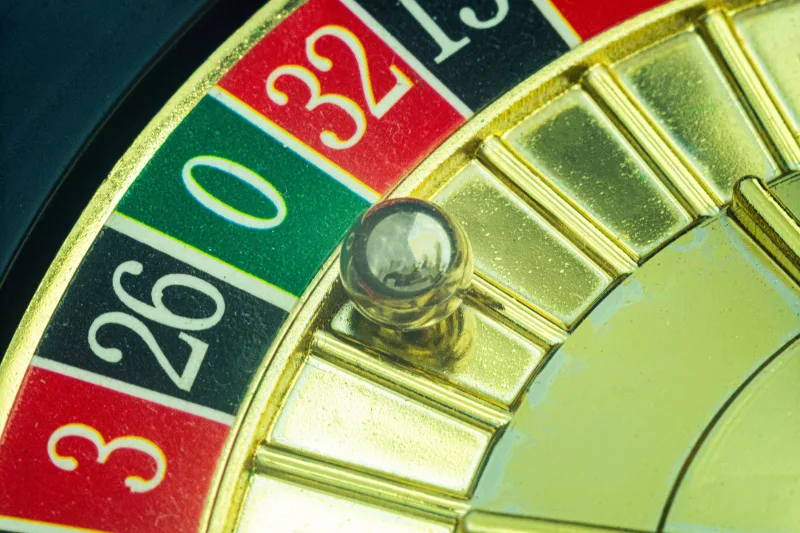
Roulette gives the cleanest gambler's fallacy example. If black has appeared several times, a player may think red is now overdue. That conclusion feels tidy, but it does not follow from the wheel's probability. The same error appears in lottery play.
A player may choose numbers because they have not appeared recently, or avoid numbers because they have appeared too often. If the draw is independent, the old draw history is not a force acting on the next draw. For roulette bet mechanics, see our roulette odds and payouts table.
The trap is easier to see if the sentence is rewritten. The claim is not just that red would look more balanced after black. It is that the wheel somehow knows the imbalance and changes the next result to correct it. That is the false step. A wheel, coin or random number generator does not carry a moral duty to produce a tidy pattern.
The famous case is the Monte Carlo Casino run. On 18 August 1913, black was reported to have come up 26 times in a row. The chance of 26 results of one colour chosen in advance on a European wheel is 1 in 136,823,184.
That is rare, but rarity after the fact does not make the opposite colour more likely on the next spin. A rare run can be both surprising and mathematically allowed.
What the law of large numbers actually says
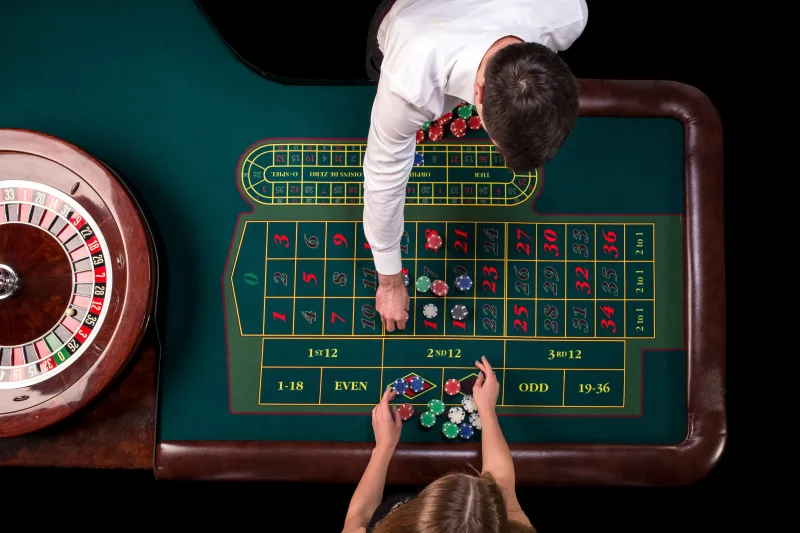
The law of large numbers says that, over many independent trials, the observed share of outcomes tends to move closer to the true underlying probability. It does not say that the next result corrects the last result.
It also does not say that a player who has lost must be repaid by future randomness. The correction happens in percentages, not in a personal balance sheet. That distinction is where many gambler's fallacy examples become persuasive.
A person sees a short sequence that looks uneven, then imports the long-run rule into the next single event. The long-run rule applies to a large collection of trials, not to the very next flip or spin in isolation.
Coin flips | Typical gap between heads and half | Gap as a share of flips |
|---|---|---|
10 | 1.2 | 12.30% |
1,000 | 12.6 | 1.26% |
100,000 | 126.2 | 0.13% |
This is the apparent paradox behind the fallacy. The share of heads moves towards its expected share, while the raw gap can grow.
In a longer set of coin flips, being 126.2 heads away from half can be more normal than being 1.2 heads away in a short set, because the percentage gap is much smaller. The past is diluted by a much larger sample. It is not repaid by a planned sequence of opposite results.
Think of the table as a warning against judging randomness by appearance. A short sample often looks messy. A long sample can still have a sizeable raw imbalance while looking much closer in percentage terms.
Both statements can be true at the same time. The law of large numbers is about the ratio settling down as the sample grows. It is not about forcing the sequence to alternate.
Why results do not balance out
Results do not balance out by compensation. They balance in percentage terms by dilution. If a roulette wheel has produced a run of reds, those reds remain in the record.
Future spins can swamp their effect on the long-run share, but they do not delete them, offset them or create a debt owed to black. The old results become a smaller part of a larger record only because more results are added.
The chance that the next European roulette spin is red is 48.65%, whatever came before. That single sentence is the mathematical core of the issue. The old sequence may change how the scoreboard looks. It does not change the next independent spin. If a player increases a stake because a colour looks due, the bet has changed, not the probability.
This is also why the phrase “balance out” can mislead. If someone means that a long sample may look closer to the expected proportion, that is sensible. If they mean the next outcomes are pushed in the opposite direction until the old imbalance has been paid back, that is the fallacy. Randomness does not owe symmetry to the person watching it.

Independent and dependent events
The fallacy is mainly a mistake about independence. Some gambling outcomes are independent. Some are not. Knowing the difference matters more than trying to read streaks.
Roulette and slots
Roulette spins are treated as independent unless there is evidence of a physical fault. A past red, black, odd or even result is not stored anywhere in the wheel. The next spin begins from the same probability model. Slots are similar in the relevant way.
Games that use random number generation do not remember that a player has had a losing spell, then schedule a payout to make the history look fair. For the slot side of this, see how slot machines work.
This point matters because slot displays can make outcomes feel connected. A near miss can look like progress. A bonus symbol landing close to the line can feel like evidence that the game is warming up. That is a visual and emotional interpretation, not a probability change. The next independent result is generated without needing to repair the previous one.
Blackjack from a shoe
Blackjack from a shoe is different. In blackjack, cards already dealt are no longer available in the same shoe. That means the past can change the next draw. Card counting relies on that dependence, not on a vague feeling that one outcome is due.
A physically biased wheel is the rare real exception on land-based roulette tables. If the device itself is biased, past results may contain evidence. That is not the gambler's fallacy. It is a claim about the equipment.
The practical test is simple. Ask whether the past result physically changes the set of possible future results. In a dealt card game, removed cards can change what remains.
In an ordinary roulette spin or random slot result, the past does not remove outcomes from the next event. This is why a method that belongs to card composition cannot be copied into roulette scoreboards or slot histories.
Biases that travel with the fallacy
Gambler's fallacy psychology is rarely just one error. Players often combine it with other biases that make random sequences look meaningful, personal or controllable. The table below separates the main ideas. It also shows why a player can switch between opposite stories without noticing it.
After a losing run, they may expect reversal. After a winning run, they may expect continuation. Both stories can feel convincing because both are built from the same raw material: a streak.
Bias | What the player thinks | What is actually true |
|---|---|---|
Hot hand fallacy | A player, table or machine is hot, so the next result is more likely to keep winning. | A streak alone is not evidence that the next independent outcome has changed. |
Inverse gambler's fallacy | A rare result seen now must have been preceded by a long hidden run of attempts. | The current observation does not prove the history that came before it. |
Illusion of control | Choosing the number, pressing the button or changing the timing can control a random result. | Personal involvement can change the feeling of control without changing the odds. |
Near miss | Almost winning means the game is getting closer to a win. | A near miss is still a loss, and it does not make the next independent result due. |
The hot hand fallacy is the closest cousin. The gambler's fallacy expects a reversal after a streak. The hot hand story expects the streak to continue. Hot hand fallacy examples include assuming a table will keep paying or a player will keep picking winners because recent results looked strong. Neither conclusion follows unless there is a real change in the conditions of the next event.
Where the fallacy costs money
Roulette scoreboards are useful for showing what has happened. They are poor guides to what comes next. A board full of one colour can pull attention towards the opposite colour, because a balanced pattern feels more natural. That feeling is the trap.
The board records old outcomes. It does not predict the next spin. A scoreboard can also create false selectivity. A player may walk past ordinary boards and stop only when a streak looks dramatic, then treat that selected streak as a signal.
Due slots create the same error in a different form. A player may stay at a machine because it has not paid recently, or leave because another machine looks warmer. If the slot outcome is generated independently, neither move is justified by the recent sequence alone.
RTP describes long-run design, not a countdown to the next payout. The same thinking can appear after a bonus round, a dry spell or several small prizes close together. Recent results may affect mood, but mood is not a mathematical input.
The Martingale is the fallacy turned into a staking plan. A $10 base bet with a $500 table limit can be stopped by 6 losses in a row on European even-money bets.
That losing run has a 1.834% chance per cycle, and when it hits, the net loss is $630. Raising stakes does not remove the house edge. It concentrates losses into the streak that the player least wants to face. See the Martingale system maths for the staking sequence.
The appeal of the Martingale is emotional rather than mathematical. Most ordinary wins feel like proof that the system works, because the next winning bet recovers earlier losses in the sequence. The failure point is less frequent, but much larger.
The plan depends on the idea that a long losing run will not arrive before the bankroll or table limit gets in the way. That is still the same fallacy. It treats a run of losses as if it makes the next win safer, even though the next independent bet keeps its own odds.

The law of large numbers works for the house
The European roulette house edge is 2.70%. On a $10 even-money bet, the expected loss is $0.27. That does not mean every spin loses that amount. It means that, as more money is wagered, the average result has a mathematical pull towards the edge. The simulation below uses 1,000 players making European roulette even-money bets.
Spins per player | Average result | Players ahead |
|---|---|---|
100 | -$25 | 363 |
1,000 | -$270 | 178 |
10,000 | -$2,671 | 3 |
The pattern is not that every player loses quickly. Short sessions can still finish ahead. The point is that more spins give the edge more room to accumulate. In the simulation, the average result falls as play lengthens, and fewer players remain ahead. That is the law of large numbers working for the side with the built-in edge.
This is the part many players reverse. They expect the law to help the person who has fallen behind. In a negative expected value game, repeated play does not give the player a stronger claim on future wins.
It gives the house edge more trials. The more often the same unfavourable bet is repeated, the more the average result tends to reflect the price of that bet.
The simulation also shows why personal anecdotes can be misleading. A short run can produce winners, and those winners may remember the session as evidence that streak reading or recovery staking helped. That does not change the average result across the full group. The individual story can be real while the conclusion drawn from it is still false.
Habits that keep the fallacy out of your decisions
The practical goal is to remove old results from decisions where they do not belong.
- Ignore scoreboards when choosing the next independent bet.
- Never raise stakes to recover losses from a streak.
- Treat every spin as the first spin for probability purposes.
- Set limits before you play, including deposit and loss limits.
- Read the gambling myths guide before accepting any claim that a result is due.
These habits do not improve the odds of the game. They reduce the chance of making the odds worse through staking decisions. The most expensive version of the fallacy is not the thought itself. It is the extra stake placed because the thought feels certain. If the next event is independent, certainty based on old results is misplaced.
Where to get help
If chasing losses, increasing stakes after streaks or feeling unable to stop is becoming hard to manage, use gambling helplines and support services by country. Support is available without needing to prove that a problem has reached a certain point.
You can also read about broader safer-play tools in our responsible gambling guide. If you are unsure whether gambling behaviour is changing, the gambling self-assessment test can help you organise the warning signs without turning a streak into a personal judgement.
What this means for your next bet
Judge the next bet by its own odds and expected value, not by the emotional shape of the last results. If an outcome is independent, the past does not make it due. If the game has a house edge, repeated betting gives that edge more chances to show. For worked examples, read our guide to expected value in gambling.
The useful question is not “what has happened lately?” It is “what are the rules, probabilities and costs of this bet right now?” That question cuts through the Monte Carlo fallacy, due-machine thinking and most streak stories.
It also keeps the law of large numbers in its proper place: a rule about long-run averages, not a promise that the next result will make the past feel fair.
Frequently asked questions
Is the gambler's fallacy the same as the hot hand fallacy?
No. The gambler's fallacy expects a reversal after a streak, while the hot hand fallacy expects the streak to continue. Both can be wrong when the next result is independent of the past.
Does the law of large numbers mean I will win back my losses?
No. It describes how averages behave across many independent trials. It does not create a personal refund mechanism, and it does not make future bets compensate for past losses.
Are slot machines ever due to pay out?
A random slot outcome is not due because of recent results. A long dry spell may feel meaningful, but the next outcome is not adjusted to repay it. RTP is a long-run design measure, not a timer.
Why is it called the Monte Carlo fallacy?
Its other name comes from Monte Carlo Casino, where black reportedly appeared 26 times in a row on 18 August 1913. Players treated the opposite colour as due, which is exactly the error the term describes.