Baccarat rules, third-card rules and odds
Baccarat rules are simple: you bet on Player, Banker or Tie, the hand closest to 9 wins, and third cards are drawn by fixed rules. The rules, third-card tables and odds are below.
How baccarat works
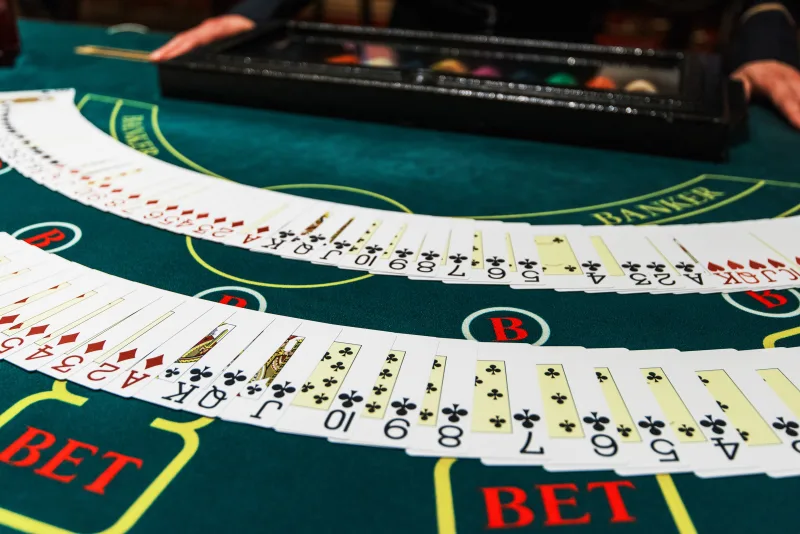
Baccarat is a comparing-card game. In standard punto banco, bettors do not play a hand themselves. They bet on Player, Banker or Tie. Player and Banker are labels for the hands on the layout, not descriptions of the people at the table.
The winning hand is the one with a final total closest to nine, unless both hands finish equal. If both hands finish equal, Tie wins and the main Player and Banker bets normally push.
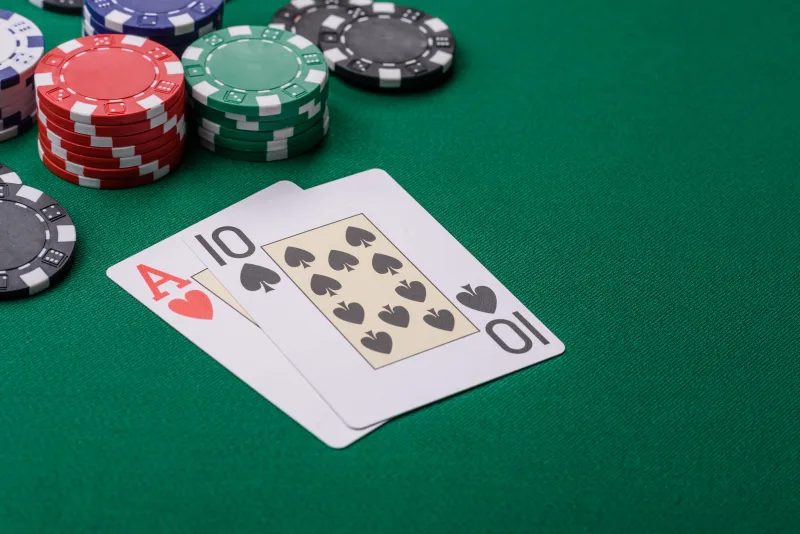
Card values are simple. Tens, jacks, queens and kings count as zero. Aces count as one. The remaining cards count at face value. Only the last digit of the total counts, so no hand can go above 9.
A seven with a five, for example, is read by its final digit rather than by the full arithmetic total. The game is usually dealt from six or eight decks, and the odds table below uses the 8-deck model. For the wider game overview, see our full baccarat guide.
The main point for players is that baccarat is not played like blackjack. You do not choose whether to take another card, split a pair or double a wager after seeing the deal.
Once bets close, the dealer follows the drawing rules exactly. That fixed procedure is why baccarat feels slow and ritualised at some tables, but the decision tree is actually narrow. Your decision is which bet to place, not how to play the cards.

How a round is played
A round follows fixed handling rules, so bettors choose a wager before the cards decide the result.
-
Bets go down. Players place wagers on Player, Banker, Tie or any side bets offered on that table. Player and Banker wagers are bets on the two hands. A Tie wager is a separate bet that both hands will finish on the same total.
-
Two cards each. The dealer gives an opening hand to Player and an opening hand to Banker. The order of the physical deal can vary by table presentation, but the result is the same: two opening hands are compared before any draw rule is checked.
-
Naturals end the round. If either opening hand totals eight or nine, no more cards are drawn. The result is then settled immediately by comparing the two totals, with equal totals treated as a Tie.
-
Third cards by rule. If there is no natural, the Player rule is checked first. If Player draws, the Banker rule may depend on the Player's third card. If Player stands, Banker uses the simpler standing rule.
-
Winning bets are paid. Bets on the losing hand are collected. Player and Banker wagers push if the final result is a Tie. Banker wins are adjusted by commission or by a special no-commission rule, depending on the table.
This fixed order matters because many misunderstandings come from treating baccarat as if it were a decision game. The bettor does not decide whether Player should draw, and the bettor does not decide whether Banker should copy Player. The rules decide it. That is why a baccarat rules chart is useful for understanding the game, but not for choosing tactical card plays during a round.
Player third-card rule
If the Player total after the opening cards is zero to five, Player draws one more card. If the total is six or seven, Player stands. If either hand has a natural eight or nine after the opening deal, no third card is drawn and the round is settled. The bettor cannot hit, stand, split or double.
This is the easiest part of the baccarat drawing rules to remember. Player acts first only in the mechanical sense that the Player hand is checked before the Banker hand. It does not mean the person betting on Player controls anything.
The Player hand may draw even if every bettor at the table has backed Banker. It may also stand even if nobody has backed Player. The labels are table positions, not player choices.
A ten-value card can still be useful, even though it counts as zero, because baccarat is based on the final hand total after the last digit rule is applied. A hand does not bust.
Adding a card can move a total closer to nine, leave it weak or reduce it after the final digit is taken. The rules do not judge whether the draw feels attractive. They simply apply the listed threshold.
Banker third-card rules
The Banker rule depends on whether Player drew. If Player stood, Banker draws on zero to five and stands on six or seven. If Player drew a third card, Banker uses the full third-card matrix below. This is the part of the rules that looks complicated, but the dealer applies it automatically.
Banker total | Player's third card: 0 | 1 | 2 | 3 | 4 | 5 | 6 | 7 | 8 | 9 |
|---|---|---|---|---|---|---|---|---|---|---|
0 | D | D | D | D | D | D | D | D | D | D |
1 | D | D | D | D | D | D | D | D | D | D |
2 | D | D | D | D | D | D | D | D | D | D |
3 | D | D | D | D | D | D | D | D | S | D |
4 | S | S | D | D | D | D | D | D | S | S |
5 | S | S | S | S | D | D | D | D | S | S |
6 | S | S | S | S | S | S | D | D | S | S |
7 | S | S | S | S | S | S | S | S | S | S |
Read the matrix left to right. D means Banker draws, and S means Banker stands. The rows are the Banker total after the opening cards. The columns are the Player's third card. Use the row for the Banker total, then move across to the column showing the Player's third card.
The practical effect is that Banker has a more conditional draw rule than Player. That is one reason the Banker hand wins slightly more often in the 8-deck calculation.
It is also why the Banker bet either charges commission or uses a reduced-payout exception on some commission-free tables. The drawing table is not optional. A dealer does not choose the most favourable move for the house during the round, because the rule has already defined the move.
If you are new to the game, do not try to use the matrix as a live decision tool. It is enough to know that Player is checked first and Banker then follows the correct row and column.
Online tables and live dealer tables normally resolve this automatically. At a land-based table, the dealer and supervisor handle it. Your main reason to understand the matrix is to know why a third card appeared, not to influence it.
Baccarat odds and house edge
The table below uses an 8-deck baccarat game. Ties push on Player and Banker bets. House edge means the long-run expected loss on the original stake, which is explained further in our guide to house edge. The win probabilities show how often each result wins before pushes are removed from Player and Banker wagers.
Bet | Win probability | Pays | House edge |
|---|---|---|---|
Banker | 45.86% | Even money minus 5% commission | 1.06% |
Player | 44.62% | 1:1 | 1.24% |
Tie | 9.52% | 8:1 | 14.36% |
Tie at 9:1 | 9.52% | 9:1 | 4.84% |
These figures show why baccarat is not an even split between the two main hands. The 8-deck calculation has Banker winning 45.86% of all coups, Player winning 44.62% and Tie occurring 9.52%.
Because tied coups exist, the two main hand probabilities do not add up to all outcomes. On Player and Banker, a tied coup usually returns the stake rather than winning or losing the main bet.
The Banker bet has the lowest house edge in the table at 1.06% under the standard 8-deck commission rule. Player follows at 1.24%. That difference is small on a single coup, but it is meaningful in expected-value terms over repeated play. For a worked explanation of why small edges matter, see gambling maths, odds and probability.
The Tie bet is the outlier. Even when the Tie pays 9:1, the listed house edge is 4.84%. At the more common 8:1 payout, the house edge is 14.36%.
The same event probability appears in both rows because the chance of a tied result has not changed. Only the payout has changed. That is the key lesson with side bets and alternative pay tables: a familiar name on the layout does not guarantee the same cost.
Side bets carry higher edges than the Banker and Player wagers in standard baccarat. Their exact cost depends on the side-bet rules and pay table, so a side bet should be treated as a separate wager rather than as an add-on that improves the main bet.
If a table shows a tempting bonus payout, the missing information is usually how often that event occurs and what house edge the pay table creates.
Commission and no-commission baccarat
In standard baccarat, a winning Banker bet pays even money minus 5% commission. The commission exists because the Banker hand wins more often than the Player hand under the fixed drawing rules.
Without an adjustment, an even-money Banker payout would not match the standard baccarat casino rules. The commission is not a charge for placing the bet. It is a payout adjustment on winning Banker wagers.
The same 8-deck calculation gives a Banker house edge of 1.06% when 5% commission applies and ties push. If tied coups are excluded and only resolved Banker bets are considered, the house edge is 1.17% per resolved bet.
That second figure can help explain why baccarat discussions sometimes quote slightly different Banker edges. They may be using a different denominator. Always check whether the quoted figure is per original coup or per resolved wager.
In the common no-commission version, a Banker win on 6 pays 1:2 rather than the usual Banker payout. For an 8-deck game using that rule, the Banker house edge is 1.46%. That is higher than the 1.06% figure for the standard Banker bet with 5% commission, so no commission does not automatically mean better value.
The label can be misleading. No-commission baccarat removes the visible commission collection, but it does not remove the casino edge. It replaces the commission with a conditional payout rule.
That change may be easier for the table to administer and easier for some players to follow, but the price of the Banker bet is set by the full rule, not by the absence of a commission box on the layout.

Baccarat variants
The main baccarat formats differ by how the hands are dealt, who controls the bank, and how much player involvement exists. The hand values often remain familiar, but table rules can change the dealing procedure, pace, commission treatment and side-bet menu. Read the displayed rules before staking money, especially on live tables and commission-free versions.
- Punto Banco. This is the common casino version. The casino deals both hands and the drawing rules are fixed. Most online baccarat and mini baccarat tables use this style, even if the presentation differs.
- Chemin de Fer. Players may take a more active role in banking and decisions, depending on the table rules. That makes it feel different from punto banco, where the bettor's main decision is the wager.
- Baccarat Banque. This is another banked form of baccarat, with a different structure for who acts as banker. The name is similar, but the table procedure is not identical to the standard casino baccarat many players know.
- Mini Baccarat. This uses the same core Player, Banker and Tie idea, but at a smaller, faster table format. The reduced presentation can make it easier to follow the result, though the betting maths still depends on the pay table.
- Speed and Squeeze tables (live). Speed tables shorten presentation time, while squeeze tables slow the card reveal for atmosphere. Both can use familiar rules, but pace changes bankroll pressure because more decisions can be made in a shorter session.
Mini baccarat rules are often the easiest entry point because the dealer handles everything and the table layout is compact. Speed tables suit players who already understand the flow. Squeeze tables add drama to the reveal, but they do not give the bettor extra control over the draw.
Across all variants, the first check should be the payout rule on Banker, the Tie payout and any side-bet table. Those details change expected cost more than the table name does.
Baccarat strategy: what actually helps
Baccarat is mainly a chance game, not a skill game. Once the wager is chosen, fixed drawing rules decide the rest. The useful decision is bet selection. The Banker bet has the lowest listed house edge at 1.06% under standard 8-deck rules with 5% commission. Player is close at 1.24%. Tie and side bets should be avoided if the aim is to reduce expected loss.
There is no trick that turns baccarat into a positive-expectation game under these rules. A staking pattern can change the size and timing of wins and losses, but it cannot change the probability of Banker, Player or Tie.
Progressions also introduce practical problems, because a losing run can require larger stakes while the underlying house edge remains. For a broader treatment of staking systems, see the truth about betting systems.
Scorecards, bead plates and road maps record past coups, but they do not predict independent coups. A long Banker run does not make Player due, and a Tie drought does not make Tie safer.
See our guide to the gambler's fallacy for the maths behind that error. Staking systems also cannot change the house edge. Use a fixed budget, stop points and account tools, covered in deposit limits, loss limits and reality checks.
The safest baccarat bet is not safe in the sense of protecting the stake. Banker is only the lowest-cost main option in the figures above. It can still lose any individual coup, and a low house edge does not prevent volatility.
A sensible approach is to decide the session spend before play starts, keep side bets out of the plan and stop when the budget or time limit is reached.
What this means before you bet
Baccarat rules are easy to follow, but the pay table decides the cost. If you play, treat Banker as the baseline comparison, check whether the table charges commission or changes Banker wins on 6, and ignore any claim that patterns can overcome the maths. To compare this game with other table games, use our guide to casino games with the best odds.
The best use of a baccarat rules chart is understanding the result, not searching for a hidden play. The third-card matrix explains why a hand drew or stood. The odds table explains which wagers cost less in the long run.
Those are separate questions, and confusing them often leads to poor choices. If the pace of the game makes it hard to stay within a limit, step away or use practical controls covered in how to gamble safely.
Frequently asked questions
Is it better to bet on Banker or Player?
Mathematically, Banker is better under the standard 8-deck rules with 5% commission because its house edge is 1.06%, compared with 1.24% on Player. That does not make it a winning bet. It only means the expected loss is lower.
Why does the Banker bet charge commission?
The Banker hand wins more often than the Player hand under the drawing rules. In the 8-deck figures here, Banker wins 45.86% of all coups and Player wins 44.62%, with ties separate. The 5% commission reduces the payout enough to leave the casino edge.
Do I need to memorise the third-card rules?
No. In a casino game, the dealer applies the drawing rules automatically. Knowing the rules helps you follow the round and spot whether a no-commission or variant table is using a different pay rule.
Is the Tie bet worth it?
The Tie bet is expensive under the common pay tables. At 8:1, the house edge is 14.36%; even at 9:1 it is 4.84%. That is much higher than Banker or Player in the table above.