Slot myths: hot machines, due payouts and timing
A random number generator settles each spin the moment you press the button, and past spins do not change it. These slot machine myths are taken apart below.
How a slot decides each spin
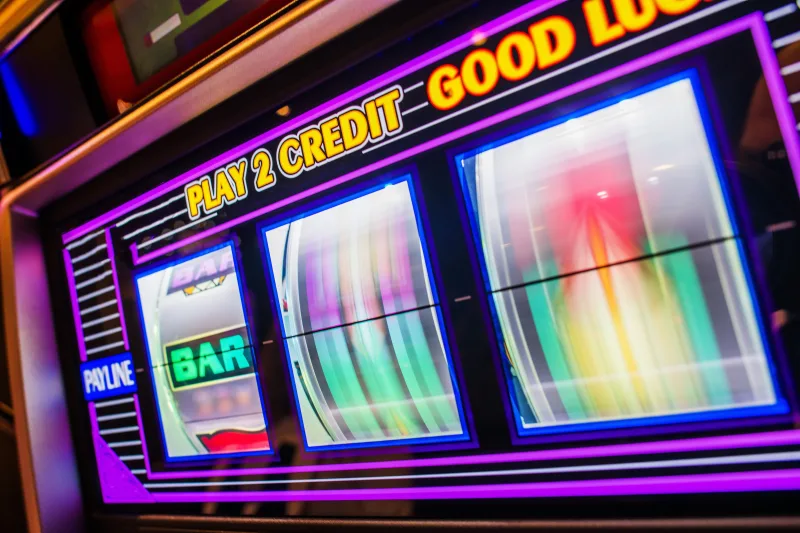
A modern online slot is a rules file wrapped around a random number generator. When you press spin, the game takes a random value and maps it to reel positions, symbols, paylines and any feature trigger set out in the rules.
The visible reels do not wander until they find a result. The random value selects the result, then the screen shows it in a form players recognise.
The result exists before the reels finish moving. The spin animation can slow down, pause near a bonus symbol, or reveal the last reel dramatically, but that is presentation. It is not a skill test and it is not an opportunity to alter the number already selected. For a deeper technical explanation, read how casino RNGs are produced and tested.
The UK Gambling Commission requires UK RNG-driven games to be acceptably random, and compensated adaptive behaviour is not permitted. In practical terms, a compliant game is not meant to pay because you are behind, punish you because you are ahead, or adjust the next spin to balance your session.
This is why recent wins, recent losses and the speed of your clicking are poor evidence. They describe your past play, not the next random value.
Hot and cold machines
Hot and cold labels usually come from short-term memory. A player sees a run of frequent wins and calls the game hot. Another player sees a run of blanks and calls it cold.
Both descriptions may feel accurate in the moment, but they do not prove that the machine has entered a different state. The table below uses a model slot with 96% RTP and 27.36% hit frequency, with winning outcomes paying 0.5x to 100x stake, over separate 1,000-spin sessions.

Measure | Session 1 | Session 2 |
|---|---|---|
Return over 1,000 spins | 108.2% | 108.5% |
Best 100-spin stretch return | 280% | 252% |
Worst 100-spin stretch return | 31% | 56% |
Longest run with no win | 16 | 12 |
The same game model produced a positive overall return in both sessions, but the route was uneven. Session 1 had a 280% stretch, a 31% stretch elsewhere, and 16 spins without a win. Session 2 had different peaks, troughs and gaps.
If you walked up during the best stretch, the game would look hot. If you arrived during the worst stretch, it would look cold. Neither label would tell you what the next spin must do.
This is the central trap in many slot stories. People group random results into narratives after they happen. A run of small wins can feel like momentum. A run of losing spins can feel like pressure building. The machine does not need either story. It only needs the next random value and the game rules that map that value to a result.
A slot is due to hit
A slot is not due because it has missed. Each spin is a new game cycle, and the previous cycle has already finished. The machine does not owe a result after a blank run, and it does not become safer because the last screen looked unlucky.
The idea feels tempting because people expect short samples to even out quickly. Random games do not have to behave that neatly inside a single session.
On the model slot above, the chance the next spin wins is 27.36%, whatever came before. That statement applies after a win, after a loss, and after a long run with no win.
The losing run may change how you feel, but it does not change the next spin’s probability. This is the same error covered in the gambler's fallacy: a random sequence can look patterned after the event without giving a usable forecast.
This also explains why advice about waiting for someone else to lose before taking a seat is unreliable. If the game is random and the rules have not changed, that player’s losses do not transfer value to you. You are not stepping into stored credit from their bad run. You are starting your own sequence under the same paytable.
Time of day, weekends and paydays
Timing myths survive because people remember striking moments. A win late at night or after payday feels connected to the clock, while ordinary losses fade from memory. Busy periods can also create more visible winners simply because more spins are being taken. More play can produce more stories, but that does not mean the time of day is an input into the RNG.
The UK Gambling Commission says annual games testing audits for UK remote games must be carried out by a Commission approved test house. That control is about whether the game operates to its rules, not whether a player chose a weekday, weekend, payday or late-night session. A licensed RNG game is assessed against its design and expected behaviour, not against casino folklore about the calendar.
There is also a difference between traffic and odds. A site may be busier at certain times. A casino floor may feel livelier when more people are playing.
None of that proves a slot has been made looser or tighter for that period. If an RTP version differs, the useful evidence is the disclosed game information and compliance testing, not a rumour about a timed switch.

Casinos tighten slots while you play
A slot can be offered in different RTP versions. In a simple example, the same slot at 96% RTP has an expected loss of $4 per $100 wagered, while a 94% version has an expected loss of $6 per $100.
That difference is real. It affects the long-run cost of the game. It is not evidence that a cabinet or online game tightened because you started winning, losing, increasing stake or playing for longer than expected.
The UK Gambling Commission requires UK game information to include house edge, RTP percentage or the probability of winning events where relevant. It also requires live RTP monitoring, comparing actual RTP with expected advertised RTP. That is why the sensible check is the game rules or paytable, not a theory about the operator reacting to your balance.
Use return to player as a cost measure. If the rules show a lower RTP version, the expected cost is higher. If the rules show the same version, your recent results are not proof that the game has changed against you.
A compliant RNG game should not use compensated adaptive behaviour to push your session back to a target. Real variance can still feel personal, especially during a fast loss, but the mathematical explanation is usually simpler: random sequences are uneven.
Stopping the reels or autoplay changes the result
Pressing stop, tapping the screen or trying to catch a symbol cannot change a result that already exists before the animation ends. The UK Gambling Commission says online gaming systems cannot offer autoplay, and its responsible product design rules do not permit turbo, quick spin or slam stop.
The same rules require customers to commit to each game cycle individually. These controls affect pace, friction and confirmation. They do not turn reel-stopping into skill, and they do not make a chosen symbol more likely to land.
This point matters because many slot interfaces are designed to feel physical. A button press can seem like timing. A near stop can seem like control. Online reels are not mechanical wheels being grabbed at the perfect instant. The displayed reel stop is the visible expression of the chosen result. Once the result has been selected, changing the animation cannot make the payline behave differently.
Near misses mean a win is coming
A near miss feels meaningful because the display places a desired symbol close to a payline or feature pattern. It is still a losing result if the rules say it is losing.
The next spin does not inherit that closeness, and the RNG is not moving through a visible queue of symbols that you nearly caught. Treat near misses as part of the game’s presentation: they can make a dead spin feel active, but they do not say that a win is coming.
Near misses can also distort memory. A player may remember being close to a bonus more clearly than an ordinary losing spin. That can make the game feel as if it is building towards something.
In random play, closeness on the previous screen has no stored force unless the rules explicitly create a persistent feature, meter or holdover state. If the rules do not carry anything forward, the next spin starts under the same conditions as any other spin at that stake and paytable.
Bonus buys and higher stakes pay better
Raising stake size does not improve the odds unless the game rules say the paytable, eligibility or RTP changes at that stake. If a slot uses the same paytable, the same RTP and the same feature rules at each stake, a larger stake scales wins and losses.
It does not make each unit staked smarter or luckier. A bigger stake can make the displayed win larger, but the underlying return terms come from the rules.
A bonus buy is different because it buys access to a feature rather than waiting for it through base-game spins. The UK Gambling Commission requires remote casino games not to celebrate a return that is less than or equal to the total stake. That matters because bonus screens can feel like success before the final return is known.
A buy can have its own return profile, volatility and price. Read the feature rules if the option exists. The right comparison is not whether a buy feels exciting, but what the rules disclose about the cost and return of that option.
A bonus buy is still a priced gamble. It can change the route into a feature, but it does not remove the house edge unless the published maths says the bet has no expected cost, and that is not something to assume.
Big progressive jackpots are about to drop
A progressive jackpot can grow while the chance of triggering it stays tied to the game’s rules. A bigger prize does not mean the game is closer to paying it, in the same way a long dry spell does not load the RNG for the next spin. The jackpot may be more noticeable because the amount is larger, but visibility is not probability.
The larger prize changes the calculation of expected value in gambling, because the possible reward is bigger. It does not by itself change the likelihood of the jackpot event. If the rules do not show a changed probability, paytable or eligibility condition, the safer assumption is that the jackpot is attractive because it is large, not because it is about to drop.
What actually matters when choosing a slot
Once you set aside timing and due-payout myths, the useful questions are about the rules you can read before a spin. Choosing well starts with cost, variance and the limits you choose, not with patterns on a recent-results screen. Appearance does not tell you the return terms of the game.
- RTP: Higher RTP means a lower expected cost over a very large number of wagers. It does not protect one session from losing. The difference between 96% and 94% RTP is a difference between an expected loss of $4 and $6 per $100 wagered.
- Volatility: A high-volatility game can pay in larger but less frequent chunks. Read slot volatility before assuming a quiet run means something is wrong.
- Hit frequency: This is how often the game returns any win under its rules. It does not tell you whether those wins are larger than the stake. On the model slot above, the hit frequency is 27.36%, but that includes all winning outcomes in the model.
- Maximum win: This caps the upside. A large cap may look exciting, but it says nothing by itself about the chance of reaching it.
For the wider mechanics, read online slots explained, then set hard limits before play with deposit limits, loss limits and reality checks.
The practical consequence is blunt. You cannot time a random slot into paying, stop reels into a better result, or make a losing run create a debt. You can choose a disclosed RTP, decide whether the volatility suits your budget, and stop before losses become a chase.
For broader false beliefs across casino games, read common gambling myths that cost players money. If gambling starts to feel repetitive, urgent or hard to leave, use responsible gambling tools and support rather than looking for a pattern in the reels.
Frequently asked questions
Do slot machines pay more at night?
No. A fair RNG slot does not become more generous because of the clock. Busy times can create more stories about wins simply because more play is happening, but timing is not a reliable way to change the odds.
Can a casino change a slot's RTP?
A slot can exist in more than one RTP version, and the version should be checked in the game rules where it is disclosed. That is different from a game tightening because you are playing it. In a properly regulated setting, the disclosed game information and technical standards matter more than rumours about a live switch.
Is a slot more likely to pay after a long losing streak?
No. A losing streak is part of the past sequence, and the next spin is a fresh random event. The streak can feel persuasive, but it does not create a debt that the slot must repay.
Does betting max improve slot odds?
Only the game rules can answer that. If a higher stake changes jackpot eligibility, paytable terms or a feature rule, that should be shown in the rules. If the rules are the same, betting more mainly increases exposure rather than improving the underlying odds.