Helping a family member or friend with a gambling problem
Helping someone with gambling addiction means supporting them without trying to control them. The decision to stop is theirs; encourage help, protect money and look after yourself.

If you need support now
A gambling crisis can feel isolating, but you do not have to handle it alone. If anyone is thinking about self-harm, feels unsafe, or faces violence or threats, call the local emergency number or a crisis line now. Gambling helplines are listed by country in our gambling helplines guide.
Signs someone may have a gambling problem
These signs do not prove a disorder. They are reasons to pause, ask direct questions and protect yourself. Look for patterns rather than a single awkward conversation, and pay attention when money, mood and secrecy change at the same time.
Gambling harm often shows up in ordinary household details before anyone uses the word addiction: a bill not paid, a story that changes, a tense reaction to a simple question, or a sudden need for cash. Treat those details as information, not as evidence for a confrontation.
- Money going missing from wallets, accounts or shared budgets.
- Frequent borrowing, including small requests that become routine.
- Hidden accounts, hidden statements or unexplained payment records.
- Long or secret sessions on phones, laptops or betting terminals.
- Lying about where time went, where money went or why plans changed.
- Mood swings linked to wins and losses.
- Neglected responsibilities at home, work, study or with children.
- Defensiveness about gambling, even when the question is calm.
Try to separate the behaviour from the person. Someone can be caring, skilled and responsible in many areas of life, while still gambling in a way that harms them and others. That distinction matters because shame can make secrecy worse. For more detail on patterns to watch for, read our guide to signs of a gambling problem.
Starting the conversation
The aim is not to win an argument. The aim is to make it safer for the person to tell the truth and safer for you to set limits.
Choosing the moment
Choose a calm, private time. Do not start straight after a loss, during an argument or when either of you is drunk. If you are frightened of their reaction, speak to a support service before you raise it.
Keep the setting simple: phones away, no audience, no children listening from the next room. You can say that you want to talk about money, stress and gambling, not about whether they are a bad person. If the conversation heats up, stop and return to it later.
It can help to prepare before you speak. Write down the specific behaviours that worry you, such as missing money, hidden borrowing or long unexplained absences. Decide what boundary you need to set, then keep it realistic. A calm conversation is still allowed to be firm. You are not asking permission to protect your own money, sleep, safety or children.
What to say
Use specific facts and describe the effect on you. Avoid insults, labels and predictions about their character. Phrases such as hopeless, selfish or ruined usually push people into shame or defence. Try statements that start with your own concern and a clear boundary.
For example: "I saw withdrawals from the joint account that I did not recognise, and I am worried." Another example is: "I want to support you, but I cannot lend money or cover gambling debts." Keep your voice steady and let silence do some work.
What not to say is just as important. Avoid promises you cannot keep, such as saying you will leave immediately if you do not mean it, or saying everything will be fine if they admit the problem.
Avoid debates about whether they are an addict. Talk about behaviour, money and safety. If they ask what you want, ask for a practical next step: calling a helpline, agreeing not to use shared funds, or attending an appointment.
What to expect
You may hear denial, anger, minimising or relief. Some people say the money is tied up, a win is coming, they can stop any time, or the gambling is not the real issue. Do not cross-examine every sentence.
A single conversation is rarely enough. Repeat the boundary, repeat the offer of help, and keep the door open. If they walk away, leave them with a practical next step, such as a helpline, a treatment page or a time to talk again.
Lies around gambling often protect access to money, time or privacy. They may sound like explanations about delayed wages, bank errors, work stress, lost cards or loans for someone else.
Do not make yourself responsible for proving every detail. If the pattern keeps harming you, respond to the pattern. You can say that trust now needs practical support, such as shared budgeting rules, treatment contact, or independent money advice.
What helps and what does not
Support works best when it is calm, practical and consistent. It does not mean absorbing every consequence, hiding the problem from everyone, or turning yourself into a full-time monitor. The person gambling remains responsible for their choices. Your responsibility is to decide what you will and will not do, then act consistently enough that the boundary is clear.
Helps | Does not help |
|---|---|
Encouraging treatment | Paying off their debts |
Clear boundaries you keep | Ultimatums you do not keep |
Talking about specific behaviour | Labels and blame |
Agreed money controls | Secret checking |
Getting support for yourself | Carrying it alone |
Paying off debts can feel compassionate, especially if the pressure is immediate. The risk is that it removes the urgent consequence while leaving the gambling route open.
If essentials are at risk, consider paying a landlord, utility provider or school directly rather than handing over cash. Keep records of any financial help. Do not take out new credit, guarantee a loan or use savings without getting advice first.
Community Reinforcement and Family Training, usually shortened to CRAFT, is a family training approach that focuses on calmer communication, reinforcing healthier behaviour and reducing rescue patterns that keep harm going. It is not a script for forcing treatment. It gives affected family members a structured way to respond, while still accepting that another adult decides whether to engage with help.
CRAFT-style thinking is useful because it moves the focus away from panic and punishment. You look for moments when the person is sober, honest, present and not gambling, then make those moments easier to repeat.
You also stop rewarding behaviour that causes harm, such as giving cash after gambling losses or covering stories told to relatives. This is not coldness. It is a way to keep support linked to recovery rather than to gambling.
Protecting your money
Money protection is not punishment. It is a safety measure. Citizens Advice says you are only responsible for debt in your own name and that borrowing money in your name without permission is fraud and illegal.
GamCare says its Money Guidance Service can help people affected by their own or someone else’s gambling in England, Wales or Scotland, although it cannot provide debt advice itself and can refer people to free debt advice providers.
- Separate accounts where possible, especially wages, benefits, rent and household bills.
- Change shared passwords and PINs if the other person has used them without agreement.
- Check your credit report for applications, cards or loans you do not recognise.
- Be careful with joint loans and cards, because missed payments can affect both named account holders.
- Ask the bank about a gambling block with the person’s agreement, and record what has been agreed.
- Get free debt or legal advice about shared property where you live before signing anything new.
A household safety plan
Have a plan that does not depend on the other person agreeing with you in the moment. Decide which account pays rent, food, transport and childcare. Keep essential documents somewhere safe.
If you share a device, email account or cloud storage, assume financial information may be visible and change access where appropriate. If you receive wages, benefits or family support, consider whether they should go into an account only you can use.
Be careful about informal repayment promises. A person under gambling pressure may genuinely mean to pay money back, then gamble again before they do. Put household bills ahead of gambling debts, private loans and emotional pressure from creditors.
If someone has opened credit in your name without permission, treat it as a legal and safety issue, not as a family embarrassment. Citizens Advice lists Report Fraud's telephone number for reporting fraud as 0300 123 2040.

Supporting treatment and recovery
Your role is to remove friction from help, not to run recovery for them. Offer to sit with them while they contact a helpline, compare treatment options, or read about how to stop gambling. If diagnosis comes up, leave that to clinicians; our guide to how gambling problems are diagnosed explains the screening terms without asking family members to label anyone.
Self-exclusion can add a barrier between the person and gambling accounts or venues, but it works best as part of a wider plan. That plan may include treatment, money controls, blocking tools, debt help and support for stress.
No honest guide can give a universal success rate, because recovery is measured in different ways and people start from different places. A return to gambling after a period without gambling can happen. Notice honest disclosures, attended appointments and protected bills. Those steps matter even when progress is uneven. For broader safeguards, see our responsible gambling guide.
Recovery is not proved by a dramatic apology. It is more visible in repeated practical behaviour: keeping appointments, accepting blocked access to money, sharing statements by agreement, telling the truth after a slip, and paying essential bills before anything else.
If the person asks for help choosing limits, our guide to deposit limits, loss limits and reality checks explains the tools without presenting them as a cure. Limits can reduce risk, but they do not remove the mathematical advantage built into gambling products.
You can also help by reducing avoidable friction. Keep helpline details easy to find. Offer transport to appointments if that is safe for you. Agree how you will respond if urges return, such as contacting a support service rather than arguing late at night. Do not make yourself the only support. A plan that depends entirely on you will usually become exhausting and fragile.
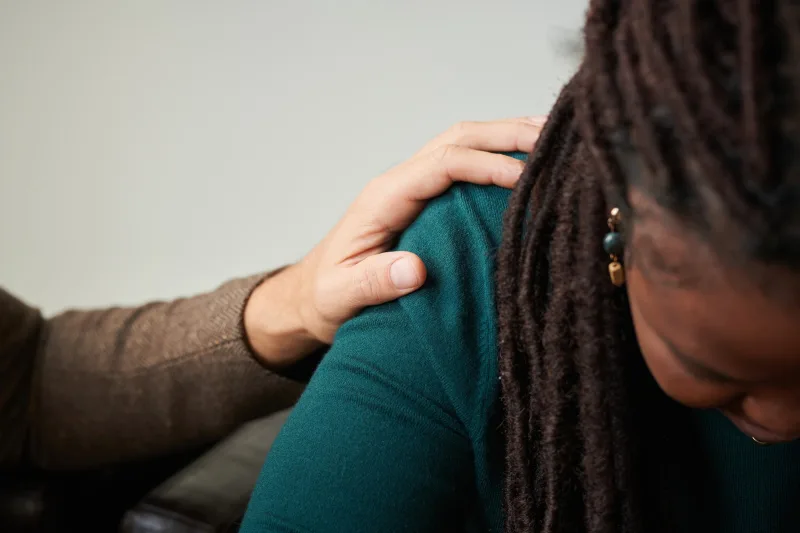
Looking after yourself
Being close to someone with gambling harm can make everyday life feel unpredictable. You may feel angry, frightened, embarrassed, protective and exhausted in the same week. Gam-Anon International Service Office says Gam-Anon exists to support people affected by someone else’s gambling problem. GamCare says it offers one-to-one support for family and friends.
GambleAware says the National Gambling Helpline is for anyone worried about their own gambling or someone else’s gambling. That matters because affected partners, parents, adult children and friends often wait until the person gambling agrees to help. You do not have to wait. Counselling, peer support and debt advice can help you think clearly, keep boundaries and stop the problem from taking over every conversation.
The psychological effects on affected others can include constant checking, poor sleep, shame, anger, anxiety about money and loss of trust. These reactions do not mean you are weak or disloyal. They are common responses to secrecy and financial stress.
Try to keep contact with at least one trusted person who knows the situation. Isolation makes it easier to accept pressure that you would question if a friend described it to you.
Looking after yourself also means deciding what you will not discuss late at night, what information children should not be asked to carry, and what behaviour makes you leave the room or seek help.
If the person gambling is also dealing with low mood, anxiety, alcohol or other problems, encourage professional support rather than trying to untangle everything alone. Gambling disorder is a clinical matter. Family members can support change, but they should not be expected to provide treatment.

Young people, loot boxes and skin betting
The Gambling Commission says the minimum legal age for most gambling in Great Britain is 18, and gambling websites it regulates must warn that underage gambling is an offence. The regulator defines skins gambling as trading, betting on or selling skins for cash on websites separate to the game.
It says loot boxes involve in-game payments to open boxes with unknown quantity and value of in-game items, and that their expenditure-and-chance features have caused concern that they are akin to gambling.
Its 2025 report says 73 percent of young people were aware you can open virtual surprise boxes with your own or parents’ or carers’ money, and 50 percent were aware of betting with in-game items on external websites.
Among aware young people, 6 percent had bet with in-game items on websites outside the game. Talk without panic. Ask what the child sees, where money can be spent, and whether items can be traded.
Use parental controls and spending limits on devices and consoles. The same report says 29 percent of young people had seen family members they live with gamble, and 7 percent of those young people said it resulted in arguments or tension at home.
Young people may not use gambling language for these features. They may talk about packs, boxes, skins, drops, upgrades, trades or rare items. Ask them to show you how spending works before setting rules. Keep the tone curious, not accusatory.
The goal is to make money and chance visible. If a child has used a parent’s card, deal with the payment controls first, then talk about pressure, advertising, influencers and friends. Do not ask a child to monitor an adult’s gambling. That responsibility belongs with adults and support services.
When to get urgent help
Get urgent help if there are thoughts of suicide or self-harm, violence or threats, or sudden serious debt that could put housing, food, safety or children at risk. If there is immediate danger, call the local emergency number. Crisis lines can also help when the gambling issue has become a mental health emergency.
Country | Crisis line | Contact |
|---|---|---|
United Kingdom | Samaritans, free from any phone | 116 123 |
United States | 988 Suicide and Crisis Lifeline: call or text | 988 |
Canada | 9-8-8 Suicide Crisis Helpline: call or text | 9-8-8 |
Australia | Lifeline Australia | 13 11 14 |
New Zealand | 1737: call or text, free, 24/7 | 1737 |
Where to get help
Use support early, even if the person gambling says the issue is under control. You do not need to have the perfect words or a diagnosis before you ask for guidance. Choose the service that matches the problem in front of you: gambling support, family support, money guidance, debt advice or crisis help.
Service | Who it can help | Contact and availability |
|---|---|---|
Gam-Anon International Service Office and Gam-Anon UK & Ireland | People affected by someone else’s gambling problem, including partners, family members or friends | 844-475-4213; international Zoom meeting 19:00 London Time, every Tuesday; parents’ meeting The First and Third Tuesday each month 20:00 to 21:00 (UK time) |
GamCare | Family and friends; people affected by their own or someone else’s gambling through Money Guidance in England, Wales or Scotland | National Gambling Helpline free of charge 24 hours a day, every day of the year; Money Guidance Service cannot provide debt advice and can refer to free debt advice providers |
GambleAware | Anyone worried about their own, or someone else’s, gambling | 0808 8020 133 for England or Scotland; 24 hours a day, 7 days a week |
People seeking debt advice | 0808 808 4000; Monday to Friday: 9am-8pm; every call, webchat and online tool is free to use | |
People seeking online debt help | Online debt help is free and available 24 hours a day, 7 days a week |
Frequently asked questions
Should I pay off a family member's gambling debts?
Usually, paying gambling debts for someone else creates a new risk: the immediate pressure disappears while the gambling pattern remains. If you choose to help with essentials, pay the bill directly rather than handing over cash. Use free debt advice before agreeing to loans, guarantees or repayment plans.
Can I self-exclude someone else from gambling?
You generally cannot complete account-based self-exclusion for another adult. You can offer to sit with them while they do it, help them list accounts or venues, and support extra barriers such as money controls. If children or vulnerable adults are at risk, seek professional advice rather than trying to manage it alone.
What if they refuse to admit they have a problem?
You cannot make another adult accept help. You can keep the conversation open, state the behaviours that concern you, and keep boundaries around money, safety and honesty. Getting support for yourself is still useful even if they refuse treatment.
Where can family members get support?
Gam-Anon supports people affected by someone else’s gambling problem. GamCare says it offers one-to-one support for family and friends, and GambleAware says the National Gambling Helpline is for anyone worried about their own gambling or someone else’s gambling. Debt charities can help if gambling has affected household finances.